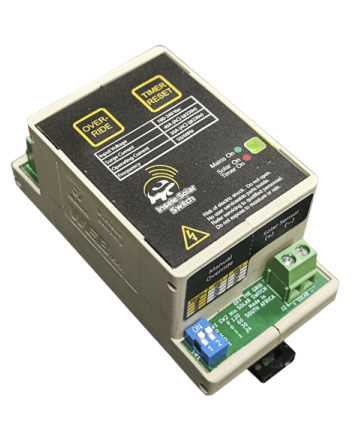
Can the Solar Switch work on any solar installation?
The Solar switch can control non-essential loads that are connected to any system.
Are there any limitations on the use of the Solar Switch?
The Solar Switch can control any non-essential load. The only limit is the current limit of 30A per unit.
How does the Solar Switch interface with the Inverter?
There is no interface with the inverter. The Solar Switch controls the load as the last device before the load. The control is based on the availability of adequate solar energy.
Can the Solar Switch control more than one load?
The Solar Switch can control more than one load as long as the loads remain in the current limit range and as long as the loads do not overload the inverter system. This will assume that the loads should be operating at the same time.
The Solar Switch can control more than one load as long as the loads remain in the current limit range and as long as the loads do not overload the inverter system. This will assume that the loads should be operating at the same time.
It is not practical to place the timer after the Solar Switch as the timer requires power to keep time and even the timers with battery backup require power to keep the internal battery charged and are not designed to operate for extended periods without power.
Can the Solar Switch replace my pool timer?
It is possible to replace the pool timer with the Solar Switch. This will just result in the pool pump starting once the sun is providing adequate energy. The only potential issue could be that the Solar System batteries may not be fully charged by the time the pool switches on and this will cause the batteries to take longer to charge.
How does the Solar Switch prevent battery cycling?
The Solar Switch prevents the designated load from running when there is insufficient solar power, so the load will not be running when the solar panels are not generating power.
Does the Solar Switch require any programming?
There is no programming required on the Solar Switch.
Only the OVERRIDE timer duration needs to be set to the required run time. Typical run times are 24/30/60/120 minutes.
My inverter has a non-essential load output. Why do I need the Solar Switch?
The non-essential output disconnects the loads typically when there is inadequate power generated on the solar panels. The reason for this is to protect the batteries from accelerated discharge and keep the essential loads powered. The problem is that this output is disabled when the grid (Eskom) power is out resulting in the load not running even if there is full sunlight and ample power being generated by the solar system.
The Solar Switch provides the best solution in this regard as it keeps the non-essential loads powered while there is adequate solar energy, independent of the grid status, but absolutely aligned to the solar power generation.
How does the switch measure the Solar power?
The Solar Switch is supplied with a special small Solar Panel (PV Cell) that is configured to function and react in a very similar manner to the solar panels (PV) on your roof. When the environment causes reduced production from the Cells, then the Solar Switch will stop the Non-Essential loads while the energy potential is low.
Can the Solar Switch be adjusted (calibrated) to trigger at different light levels?
No. The Solar Switch was developed to offer a simple and autonomous control based on the typical application and parameters of a “normal” installation.
What are the advantages of using the Solar Switch?
The Solar Switch brings several advantages:
Protect the batteries in the solar/inverter system from being drained excessively and reducing the lifecycle of the batteries.
Reduce the demand from the system for the use of Grid (ESKOM) power
Run loads only when there is good solar energy available
Fully autonomous.
Do I need an electrician to install my Solar Switch?
The Solar Switch can be installed by any competent person who is able to safely install such devices into the electricity circuit. The person should understand electrical standards and conventions and ensure that the installation is compliant with these standards.
What is the minimum size of solar system that can use the solar switch?
Any size of solar system can use the Solar Switch, but most applications tend to favour systems that are approximately 5kVA and larger.
What if the load I want to use draws more power than 30A?
The maximum current rating for the Solar Switch is 30A. If the load is larger than this, and the solar system supplying the power is adequately large to supply this large current then a contactor can be introduced to manage the higher powered devices.
Can the Solar Switch control a 3 phase device?
The Solar Switch cannot directly control a 3-phase device, but it can be used to control a 3-phase contactor which will control the 3-phase device.
Can the Solar Switch control a single phase device in a 3-phase installation?
The Solar Switch is perfectly suited to well-control any single phase devices.
What do I do if the location of the switch installation is in a heavily shaded area?
It is vital that the sensor has adequate and unobstructed visibility of the sky to prevent accidental shading and poor performance of the load being controlled. The signal cable from the sensor to the Solar Switch can be extended up to 40m with very little impact on performance. The important factor to consider is that a reasonable, low resistance cable needs to be used. (1-2mm ripcord is typically adequate)
Must the Solar Switch sensor be installed on the roof?
The Solar Switch sensor does not have to be located on the roof or “next to” the solar panels on the roof, but simply requires an unobstructed view of the sky.
Can the Solar Switch Sensor be installed on a pole in the garden?
The Solar Switch Sensor can be installed on any fixed structure (Pole, wall, fence, roof, etc) where is it stable, it has an adequate view of the sky and in reasonable proximity to the Solar Switch.
What devices/loads can the Solar Switch control?
The Solar Switch can control any AC device within the parameters of the current and power limits. These are loads that can run during the day and are not a sever impact if they are disabled when the solar energy is low.
Pool Pumps
Borehole pumps
Geysers
Heat Pumps
Irrigation Pumps
Air-conditioner
etc
How much money can the Solar Switch save on an electricity bill?
The amount of saving on the electricity consumption is dependent on the load and how the load is used and where the load has been connected before the installation of the Solar Switch. An example of potential saving is a pool pump of 1kW that is grid tied (running exclusively on the grid). Based on a pool running for 4-6 hours per day the potential saving is in excess of R500 per month.
What is the saving if my pool (or other loads) are already connected to the Solar System?
If the loads are already connected to the solar system then there is a high risk of the batteries being depleted very quickly if there is a power outage and overcast situation. This increases the battery cycles and reduces the battery life. By preventing this unnecessary battery cycling the life of the batteries is extended and the high cost of battery replacement deferred.